An evolving action plan to improve air quality
In 2022, Île-de-France Mobilités, the transport organising authority in the Île-de-France region, in association with its operators RATP and SNCF, adopted an action plan to limit particle emissions.
An evolving action plan, which is enriched as new knowledge, standards evolve and technological innovations.
The actions are grouped into 3 main axes :
- Improving knowledge of particulate matter and public information
- Develop existing tools and test new ones
- Upgrading metro and RER trains to reduce sources of emissions
1. Improving knowledge about particulate matter and informing travellers
To effectively improve air quality in underground railway enclosures, it is essential to develop knowledge of particles, including fine and ultrafine particles, in complete transparency.
Improving knowledge about particles
This requires in particular a more efficient identification of emission sources, the understanding of influencing factors, but also the study of the physicochemical characteristics of particles.
Permanent measures
Today, nine sites are equipped with a permanent measuring station in the Île-de-France region:
- Sevran-Beaudottes (RER B)
- Porte de Clichy (RER C)
- La Défense (RER E)
- Auber (RER A)
- Châtelet-Les-Halles (RER A)
- Nation (RER A) - Temporarily moved to Luxembourg (RER B)
- Avenue Foch (RER C)
- Franklin Roosevelt (Line 1)
- Châtelet (Line 4) - Temporarily moved to Saint-Germain-des-Près (Line 4)
- Jena (Line 9)
Ad hoc measurements in stations and in the trains
The permanent measurements in the stations are supplemented by ad hoc measurements in the stations and in the trains, in particular with harmonised criteria (in accordance with the INERIS guide), in order to obtain a more complete and up-to-date knowledge of air quality.
Installation of monitoring sensors
At the same time, Île-de-France Mobilités has asked RATP to develop sensors for monitoring ultrafine particles, which will provide a better understanding of them.
Inform travellers in complete transparency
In this quest to improve indoor air quality, passenger information is key. And this requires greater transparency of the data collected, with more data available in Open Data.
Airparif, an expert partner of Île-de-France Mobilités
To rigorously analyse the evolution of air quality in underground railway areas, Île-de-France Mobilités has chosen to rely on Airparif's expertise as part of a multi-year partnership.
The objectives? To have scientific expertise, to improve measurement methods and knowledge, to analyse existing solutions, to contribute to the identification of priorities for improving air quality and to facilitate information on air quality.
In 2023, several projects aimed at improving air quality monitoring were launched in collaboration with Airparif and operators :
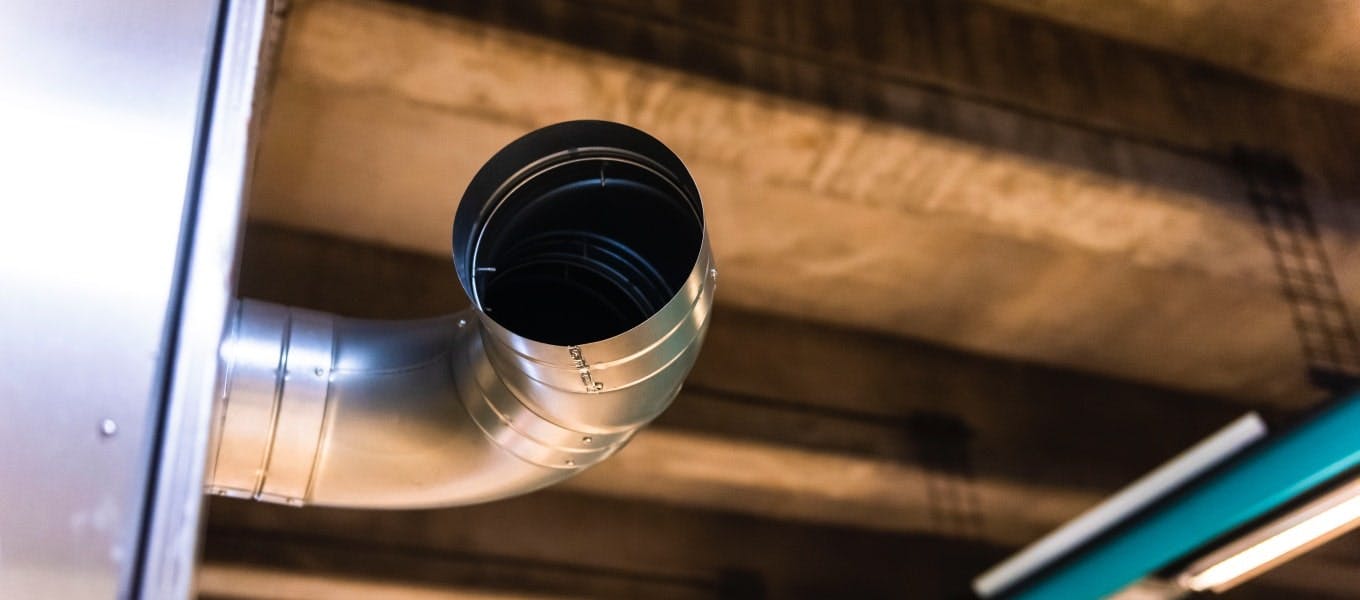
- Measurement of particle levels at the outlet of ventilation outlets
- Classification of PM10 and PM2.5 levels in RATP and SNCF underground railway enclosures
- Mapping Air Quality in Underground Railway Enclosures
- Study of passenger exposure to particles in trains (in progress).
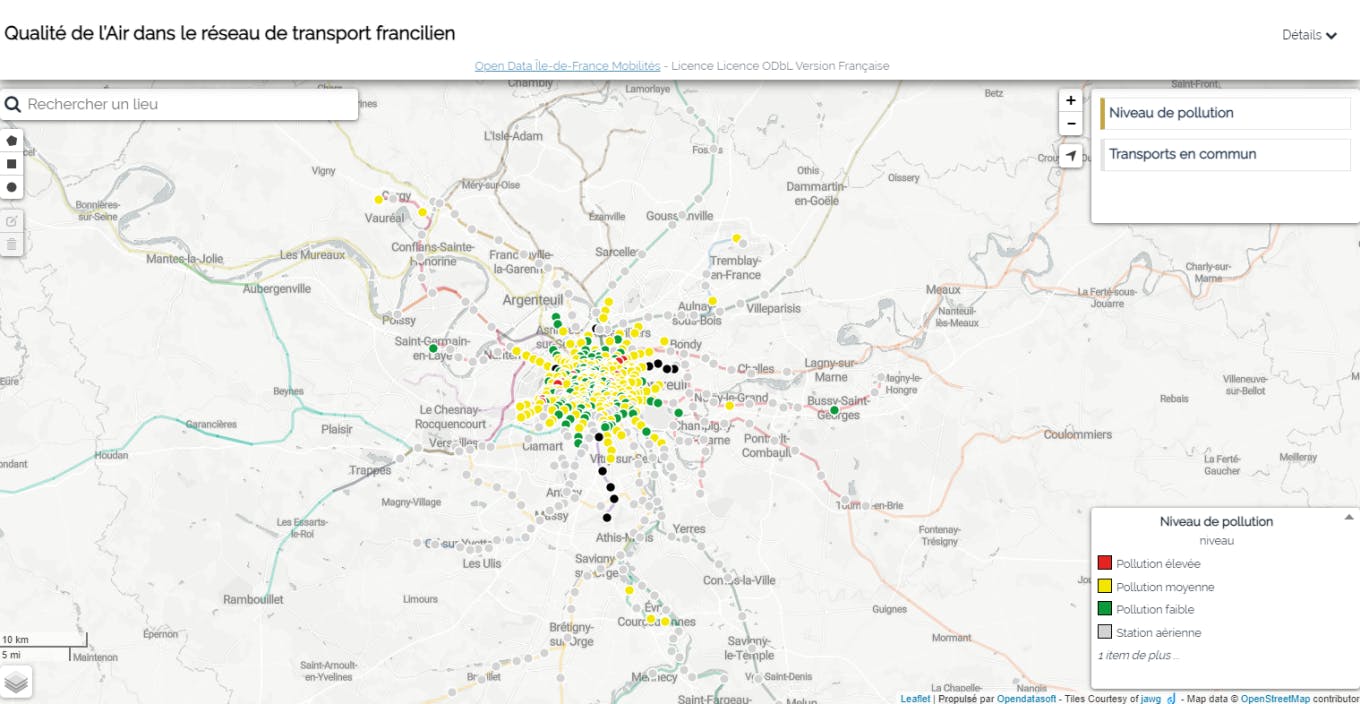
Mapping of air quality in all underground stations available in Open Data
After publishing in October 2023 a map of the air quality and PM10 particle levels of 44 underground metro and RER stations, Île-de-France Mobilités is publishing in October 2024, thanks to the agile and innovative work of Airparif, a map of the air quality in all the underground stations of the Ile-de-France network, available in open access in Open Data (based on ANSES recommendations). The last update of this mapping dates from September 2026.
The goal?
- Offering clear, transparent and scalable information to passengers
- Optimize the action plan by prioritizing initiatives in the stations with the highest levels.
How to read the map?
The map, which is based on ANSES's recommendations in terms of passenger exposure to particles, classifies metro and RER stations according to particle concentrations, for each station on each line, and according to three colours :
- Red (pollution above the threshold of ANSES recommendations)
- Yellow (medium pollution)
- Green (low pollution)
- Grey (aerial stations, outdoor pollution)
- Black (no data)
Encouraging initial results
Of the 419 station platforms analysed:
- 141 are green with a low particle content (34%)
- 273 have average pollution (65%)
- 5 are in red in the high category (1%)
Out of all the stations and underground stations, 8 stations could not be classified due to a lack of information. These are the recently inaugurated stations on line 14.
Note: 236 stations are overhead, and therefore open to the outside world; they have not been classified.
In August 2026, 1% of classified stations and stations have a high level of pollution (i.e. 5 stations and stations):
- Line 2: Belleville
- Line 5: Ourcq, Jaurès and Oberkampf
- RER C: Porte de Clichy
2 - Develop existing tools and test new ones
To reduce the concentration of fine particles, the first measure to be taken is to circulate the air in the underground railway enclosures.
Financing the improvement of ventilation systems
Île-de-France Mobilités is therefore financing the RATP and the SNCF in order to increase or improve the capacity and flow of the ventilation systems and to add new fans.
Renewal and modernization of fans
Between 2021 and 2024, 31 fans for smoke extraction and benefiting IAQ have been renewed (Philippe Auguste (Line 2), Gare de l'Est (Line 5), Pelletier (Line 7)) and/or have had their comfort flow increased (La Défense (RER A), Jaurès (Line 5), Voltaire (Line 9)).
Between 2025 and 2026, it is planned to target 15 ventilators, including 9 on the metro and 6 on the RER.
Targeted studies conducted by RATP
- Study for the installation of new fans or the increase in the comfort flow rate of the fans present on the network operated by the RATP.
- Addition of a fan: a fan was created on metro line 5 between Bastille and Quai de la Rapée in 2023.
- The test of a device that would increase the flow rate of the fans.
The example of the Saint-Michel Notre Dame station (RER C)
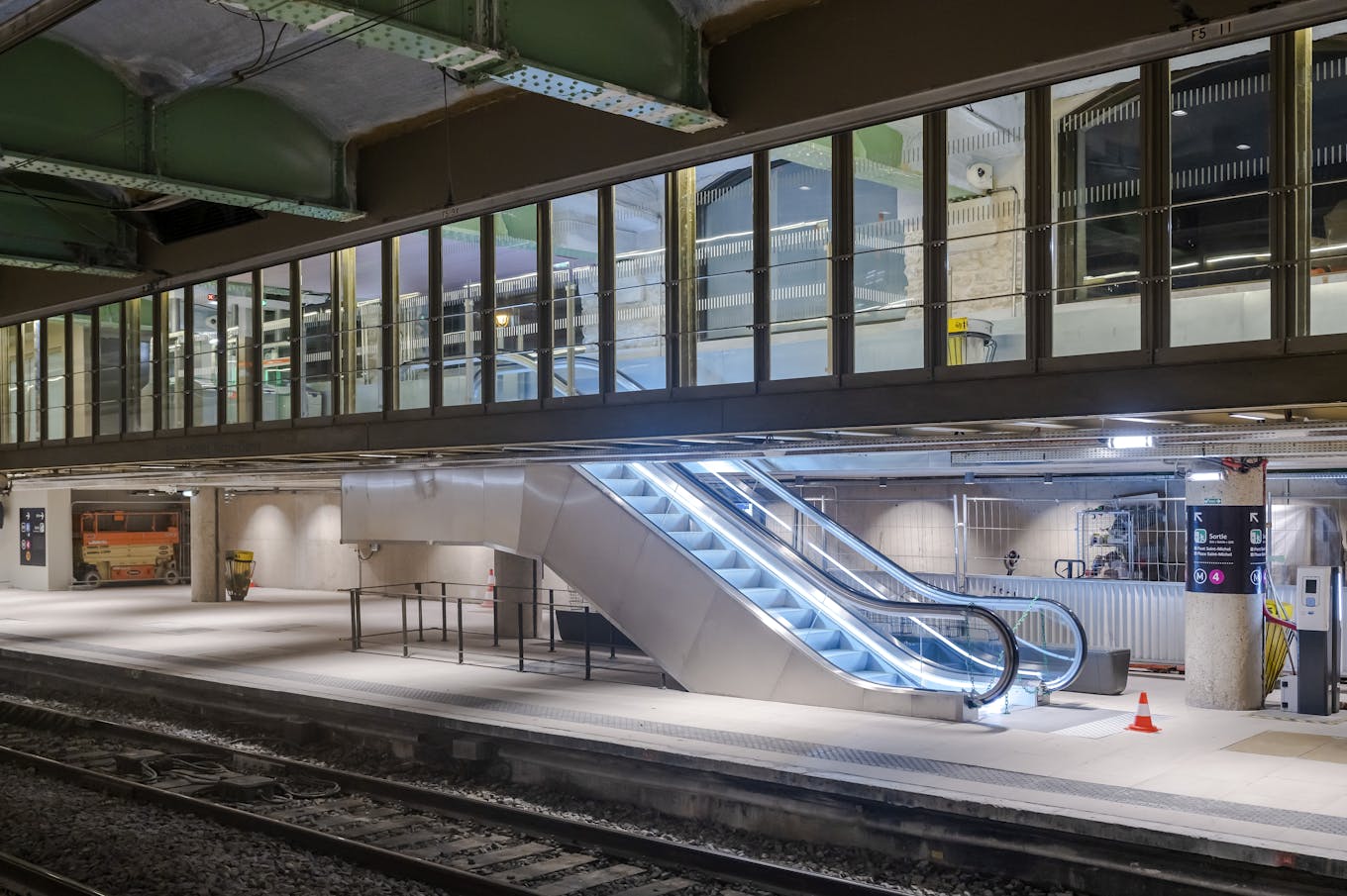
Saint-Michel Notre-Dame station on RER C line
Île-de-France Mobilités wants a logic of opportunity to develop when major works are carried out to improve air quality through architectural solutions, as was the case on the SNCF network with the work on the Saint-Michel Notre Dame station (RER C) which made it possible to open bay windows on the banks of the Seine in April 2023, to improve natural ventilation.
Encouraging innovation towards sustainable solutions
Following the Île-de-France Region's call for projects (2018-2021), several technologies were selected for their potential effectiveness.
Île-de-France Mobilités also finances the RATP and the SNCF, which have selected several sites to experiment with the treatment of air on the platforms with different technologies: particle trapping, particle-fixing product, mechanical filtration, water filtration.
Several devices under testing
Between 2025 and 2026, RATP tested an electrostatic filtration system at Belleville station and a misting system at the outlet of the ventilation grille.
An air curtain to reduce the intrusion of pollutants from the outside into the stations is being tested at the Pont Marie station (line 7).
Two air treatment technologies on the RER C
The test of a mechanical air filtration solution was launched by SNCF Gares & Connexions in January 2025 at Porte de Clichy (RER C). SNCF Gares & Connexions has also been testing a water filtration solution at the Neuilly Porte Maillot station (RER C) since June 2026.
The objective is to test these two devices for a year and to be able to observe the results in these two stations.
3. Upgrade metro and RER trains to reduce sources of emissions
New rolling stock that reduces emission sources
The new metros put into service (MF01, MP05, PM14 and MF19) reduce particulate emissions related to "mechanical braking", which is one of the main sources of particulate matter in metro tunnels.
This modernization is spread over several years and between now and the very end of the program in 2034, Île-de-France Mobilités has asked the two operators to experiment and develop new materials for braking systems that reduce particulate emissions and that could be rapidly deployed, in particular new brake shoes and linings that emit less particulate matter.
Experiments on the rolling stock of metro lines 2, 5 and 9
Experiments are underway on the MF01 (metro lines 2, 5 and 9). If the results are conclusive, these new brake shoes can be deployed on the rolling stock serving the five stations classified in the high category on the map.
New brake linings on the RER A and RER C
- On the RER A, a lower-emission brake lining has been deployed to limit particle emissions due to braking.
- On the RER C, brake linings and shoes are being tested.
Île-de-France Mobilités finances and manages the improvement of air quality in underground transport in the Ile-de-France region
Since 2020, Île-de-France Mobilités' investments in improving air quality have amounted to nearly €61 million (excluding the renewal of rolling stock).
Île-de-France Mobilités manages and monitors the operators' action plans. Action plans, which will be oriented and amended if necessary, according to the results of the various actions carried out to improve air quality.